
EXCELLENTTrustindex verifies that the original source of the review is Google. Thank jayPosted onTrustindex verifies that the original source of the review is Google. Thanks jayPosted onTrustindex verifies that the original source of the review is Google. Great service .I highly valur and reccomend their work.Thank u jay for the servicePosted onTrustindex verifies that the original source of the review is Google. Great company. Hope you guys provide work too like constructions and all. Thank you joy.Posted onTrustindex verifies that the original source of the review is Google. Their services were great and highly professional.Posted onTrustindex verifies that the original source of the review is Google. Thanks Jay great servicePosted onTrustindex verifies that the original source of the review is Google. Excellent work VMB. Especially thanks to jay.Posted onTrustindex verifies that the original source of the review is Google. Thank Jay for these wonderful servicePosted onTrustindex verifies that the original source of the review is Google. Awesome service ian, highly recommend.Posted onTrustindex verifies that the original source of the review is Google. These guys are awesome. Ian is awesome. Contact them.
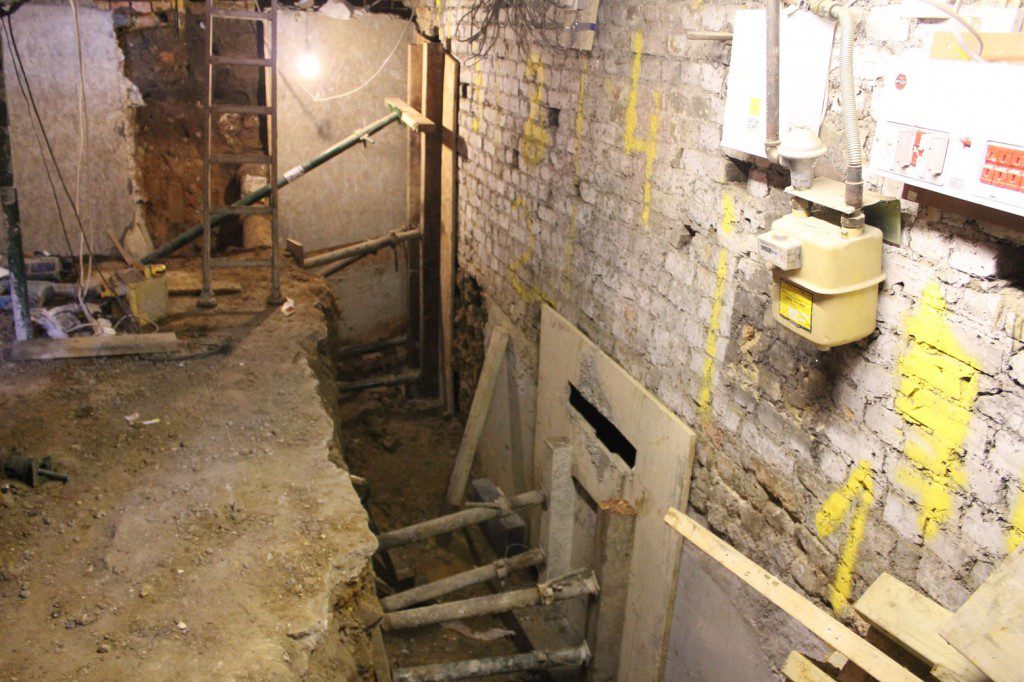
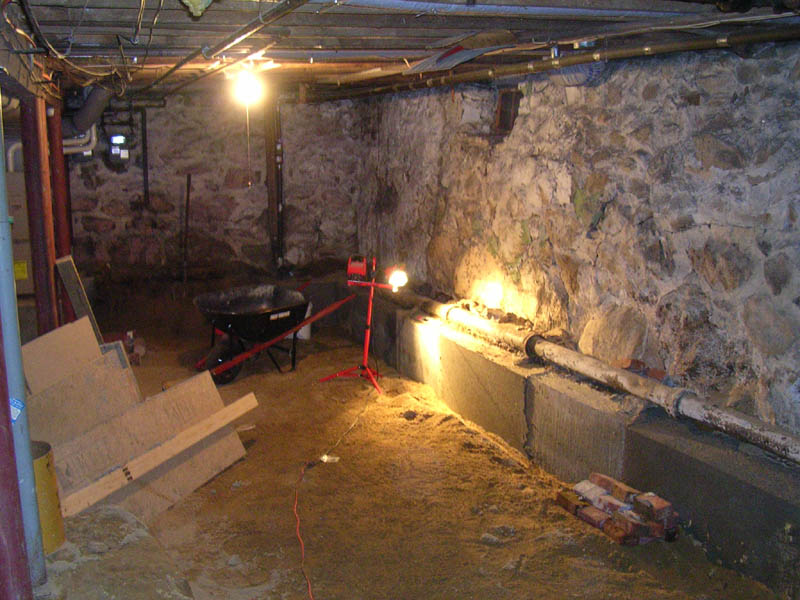
Basement underpinning is the act of adding bulk beneath your basement to repair weakened and faulty basements. It practically involves digging up soil beneath the basement to lower the basement surface. Once the soil is removed, new concrete is added to the extended surface, below the initial foundation making the building stronger. In addition to that, the basement room also has more height and you can modify it into anything you like.
Renovating your basement for various reasons is essential to achieve more space and create an extra room such as a playroom, study room or a small theater for family movie night. Whatever your reasons are, basement underpinning is one of the basement renovations that will also help add value to your home. Buildings are built over a strong foundation, but with time, it can weaken due to certain factors. Weak foundations can be attributed to a pest infestation, leakages or weak structural faults caused by shifting earth or floods. To counteract the weakened foundation, you can consider underpinning as a preventive measure to keep your building strong and standing.
Basement underpinning typically costs between $80 to $500 per linear foot. For a standard project, this translates to a total expense ranging from $20,000 to $50,000. For precise costing tailored to your specific project, it’s best to consult directly with a professional underpinning service.
At VMB Group Underpinnings, we’ve been providing expert underpinning services for over 20 years and offer the best prices in the industry. Contact us today for a free estimate!
The Cost of Building Permits for Underpinning ranges $2,000 – $3,000. Before you begin underpinning your foundation, a building permit is typically required. This permit ensures that your project meets local building codes and regulations.
$2,000 – $3,000 per permit.
The Cost of Hiring a Structural Engineer for Underpinning ranges $100 – $200 per hour. Hiring a structural engineer is crucial for underpinning. They play an essential role in identifying potential problems and ensuring the foundation is strong enough to support your home.
$100 – $200 per hour
The Cost of Hiring a Contractor for Underpinning ranges $100 – $200 per hour, typically 10% – 20% of the total project cost. Local foundation repair contractors manage the underpinning process, which includes planning, excavation, and construction.
$100 – $200 per hour
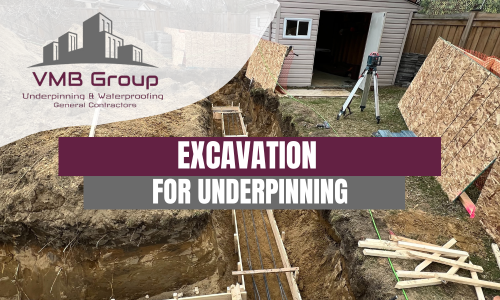
The Cost Of Excavation For Underpinning ranges $75 – $200 Per Hour. Excavation is an essential part of the underpinning process, involving the removal of soil and debris to create space for the basement underpinning work.
$75 – $200 per hour
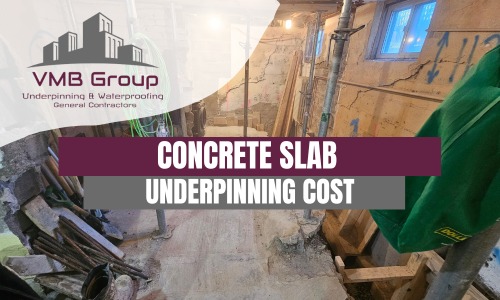
The Cost Of Concrete Slab Underpinning ranges $3 – $20 Per Square Foot. Concrete slab underpinning, also known as slab jacking, is a method where grout is injected under a sunken concrete slab to lift it back to its original level.
$3 – $20 per hour
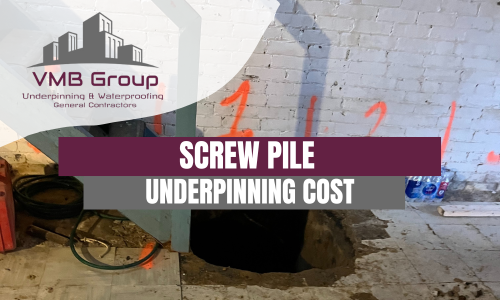
The Cost Of Screw Pile Underpinning ranges $15 – $30 Per Foot. Screw pile underpinning, or pier underpinning, involves driving helical piers deep into the ground to stabilize the foundation. The cost varies depending on the number of piers needed.
$15 – $30 per hour
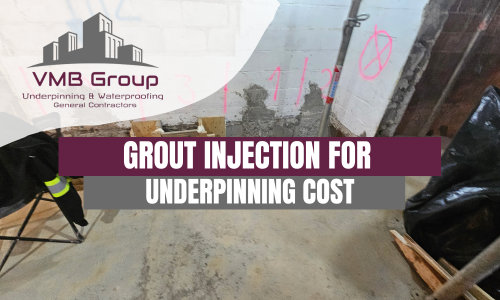
The Cost Of Grout Injection For Underpinning ranges $75 – $230 For Materials. Grout injection, also known as resin injection, is a modern method used to stabilize foundations. It involves injecting a grout mixture into the ground to fill voids and strengthen the soil.
$75 – $230 per hour
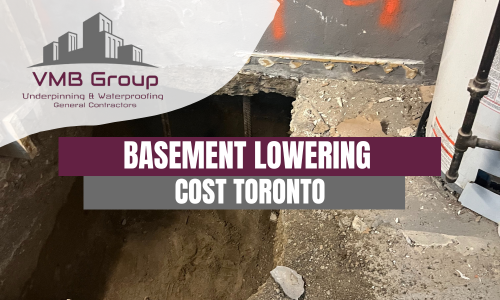
The Cost of Basement Lowering ranges $20,000 – $50,000. Lowering the basement floor increases ceiling height, making the space more usable. This involves extensive excavation and underpinning work to lower the existing floor, a complex and labor-intensive process.
$20,000 – $50,000 per project
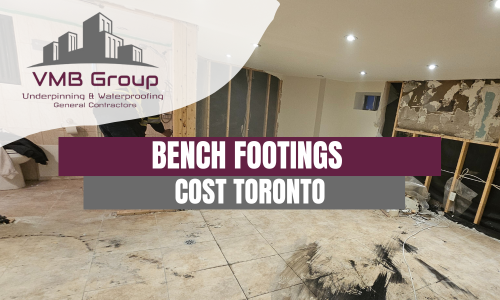
The Cost of Bench Footings for Underpinning ranges $75 – $150 per linear foot. Bench footings are used when full underpinning isn’t necessary. This method involves creating a ledge or “bench” around the foundation walls, adding support without extensive excavation.
$75 – $150 per liner foot
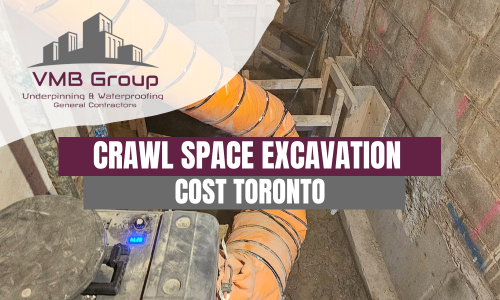
The Cost Of Crawl Space Excavation ranges $50,000 – $100,000. Converting a crawl space into a full basement involves significant excavation and underpinning work. This process increases the usable space in your home but requires careful planning and execution.
$50,000 – $100,000 per project
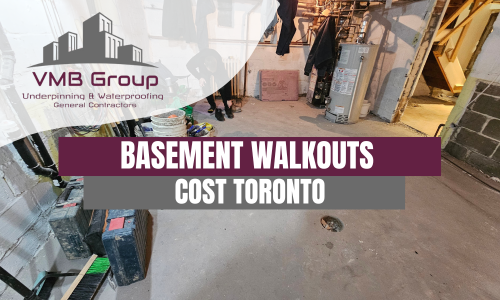
The Cost of Basement Walkouts ranges $10,000 – $30,000. Converting a crawl space into a full basement involves significant excavation and underpinning work. This process increases the usable space in your home but requires careful planning and execution.
$10,000 – $30,000 per project
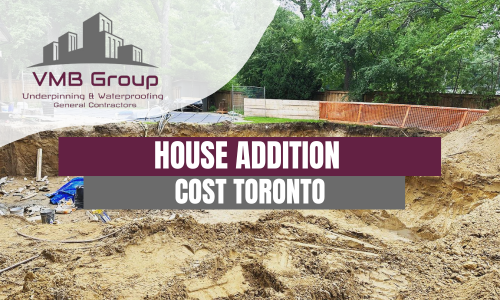
The Cost of House Addition ranges $100 – $200 per square foot. Adding a new section to your house through basement underpinning involves extending the foundation and supporting the new structure. This method allows for additional living space without compromising the existing foundation’s integrity.
$100 – $200 per square foot
Basement underpinning is a very complex building process that can affect the structural integrity of a home. It is necessary to complete all drawings and obtain city permits before starting this type of work. The architect will calculate the best option for performing basement underpinning works and provide drawings. After that, the drawings must be approved by government agencies and received a building permit. Only after that, it will be possible to start work on the basement underpinning. Getting city permits can take up to 5 weeks, so you should plan all stages of work.
It is necessary to prepare the house basement before starting the underpinning process. The duration of this stage of work varies in each project. It all depends on what condition the basement was in and what it was used for. It is necessary to take out all things and demolish additional structures that could be placed in the basement. Disconnection of sewerage from the city system is carried out at the preparation stage. The main stage of basement underpinning can be started after all preparatory work has been done.
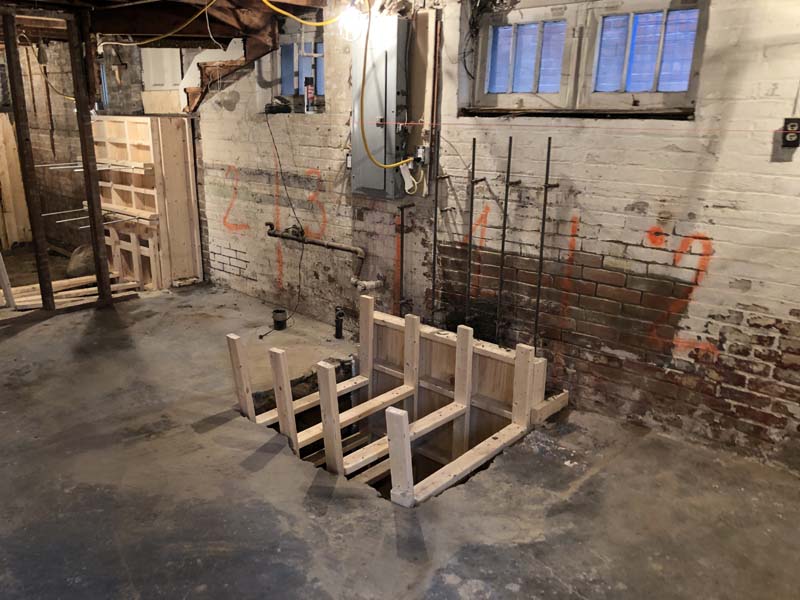
Basement underpinning is a complex type of work that can affect the stability of an entire home. The architect calculates the load on the walls and divides them into special sections. Each section is 2 to 3 feet long and workers dig them in at intervals to keep the building stable.
Wooden formwork is installed in the excavated sections for further concrete pouring. An inspection must be carried out before the concrete is poured. The inspector checks the correct installation of all elements and only after that the concrete is poured. Work with the following sections begins when the concrete hardens. The sequence of actions will be the same as in the first case. Once the underpinning of the entire perimeter is complete, you can move on to the next stage of work.
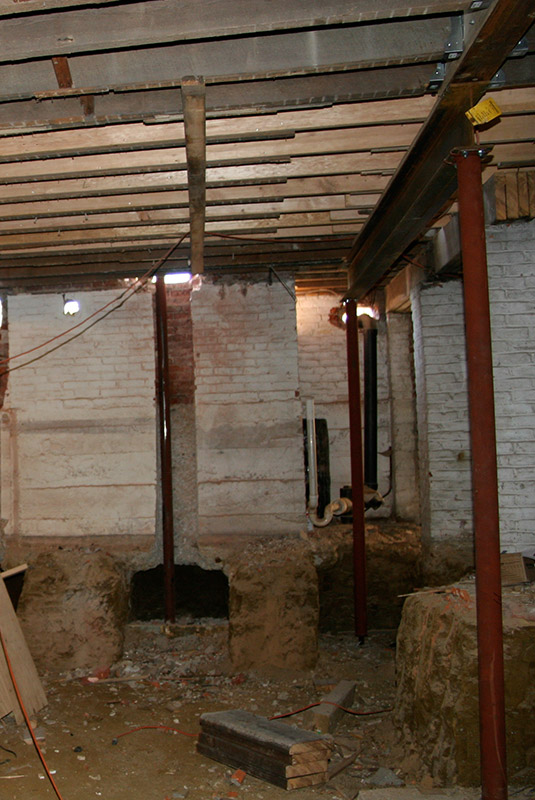
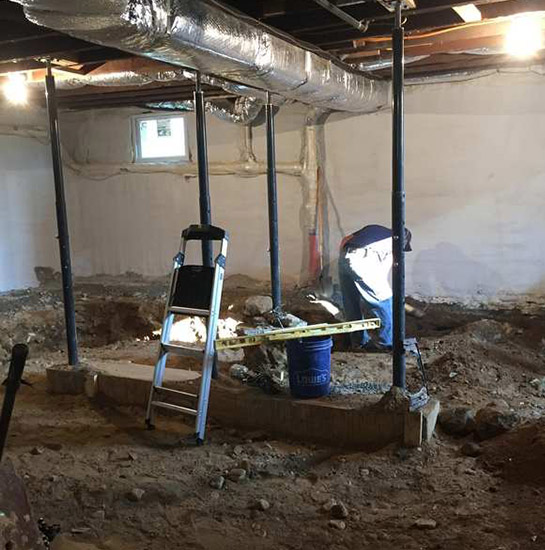
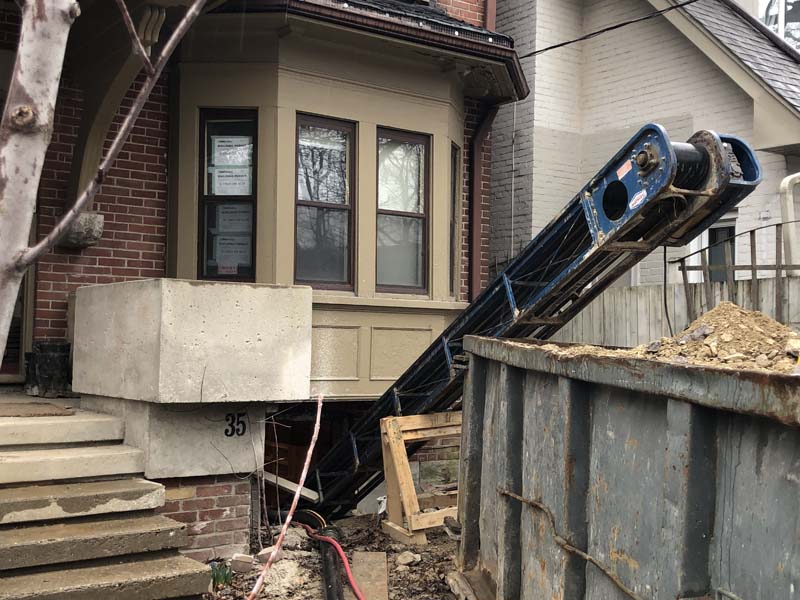
The next step is the excavation of the center section in the basement. This is a rather laborious process during which the bulk of the soil is excavated from the basement. This work is carried out with small excavators whenever possible. This stage can also be performed manually using shovels if there is no open access to the basement. This stage will take about a week in this case. Also at this stage, the internal load-bearing walls are gradually demolished. Jack posts are temporarily installed in their place to prevent the house from collapsing. All work is carried out according to the drawings and under the supervision of engineers.
No wonder the basement is the wettest place in the house due to its location. It is necessary to install a quality drainage system to prevent leaks and dampness in rooms that have just been renovated. There are several ways of drainage and we discuss this stage personally with each client. It will also be possible to replace all plumbing systems during this stage. This will allow you to upgrade all the pipes in the basement without the need for further demolition of the concrete floor and walls.
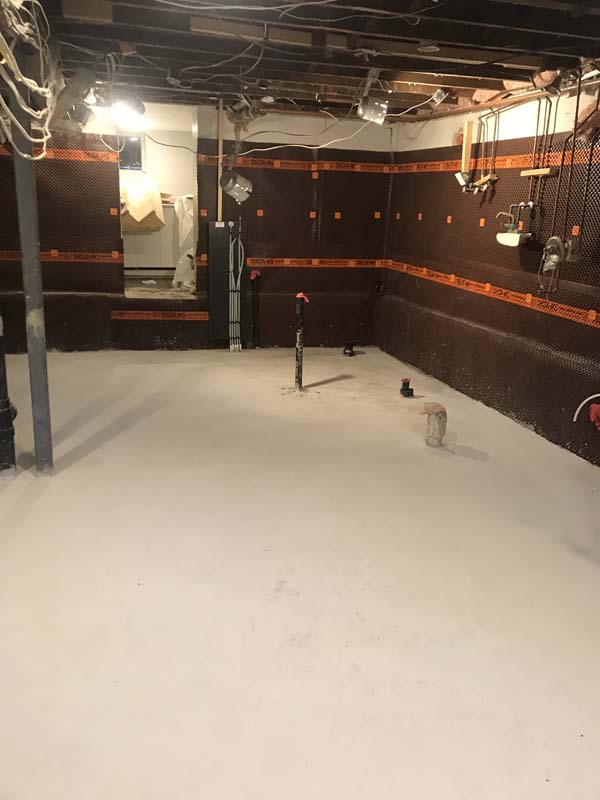
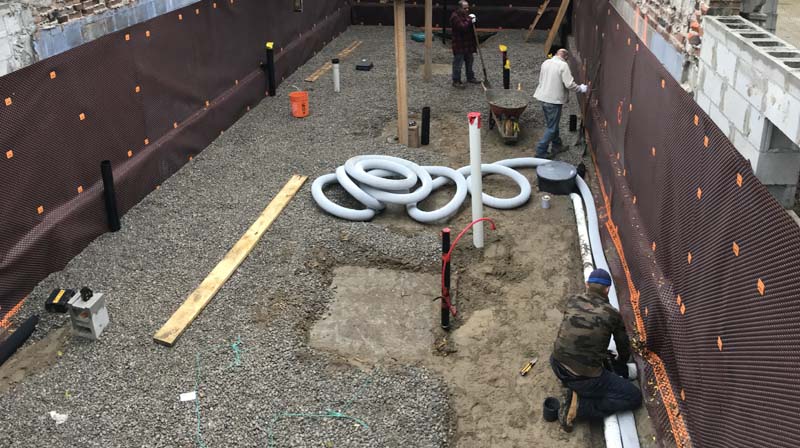
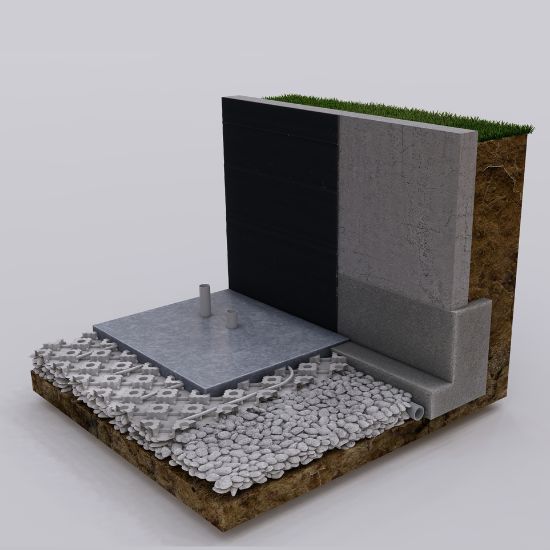
Moisture inside the basement can come from almost anywhere. Installing a good drainage system is not enough. Water can seep out of the walls and from under the foundation. Special waterproofing layers are installed to prevent this problem. Delta membrane is installed on the interior side of the walls which protects your basement from the dampness of the walls. The new foundation level has been completely excavated and gravel is laid on the ground to provide foundation waterproofing. These protective measures will ensure that your basement is protected from leakage and excessive moisture for many years.
It is worth taking care of the insulation of the basement before laying the concrete. This room is partially underground and heating it can be quite problematic. The best solution to this problem is to install a radiant heating system and a special insulating layer. This layer helps prevent moisture from entering the concrete floor that will be installed in the next step.
Installing a radiant heating system is much easier and cheaper to do at this stage before the concrete floor is poured. If you do not plan to use this system yet, you should still consider installing it in the future. If you decide to install this type of heating in a couple of years, then you will have to spend a significantly larger amount of money due to the demolition of the concrete floor.
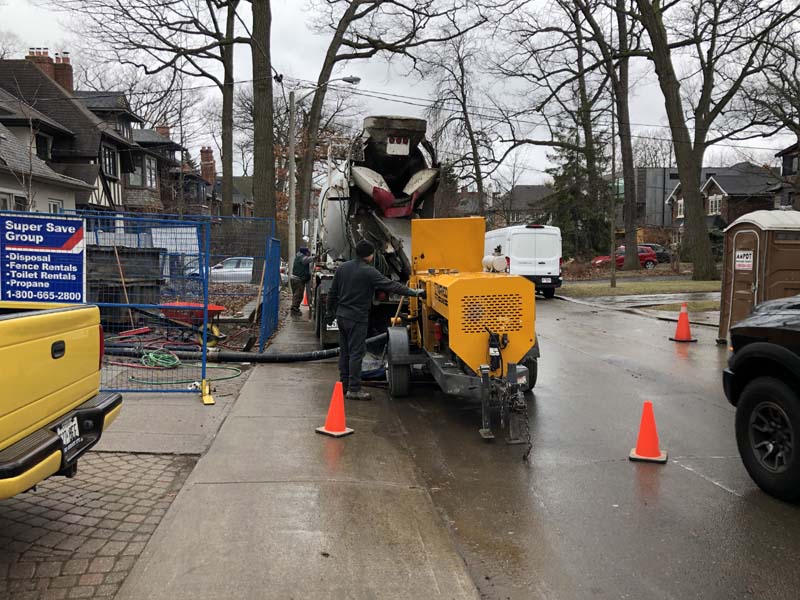
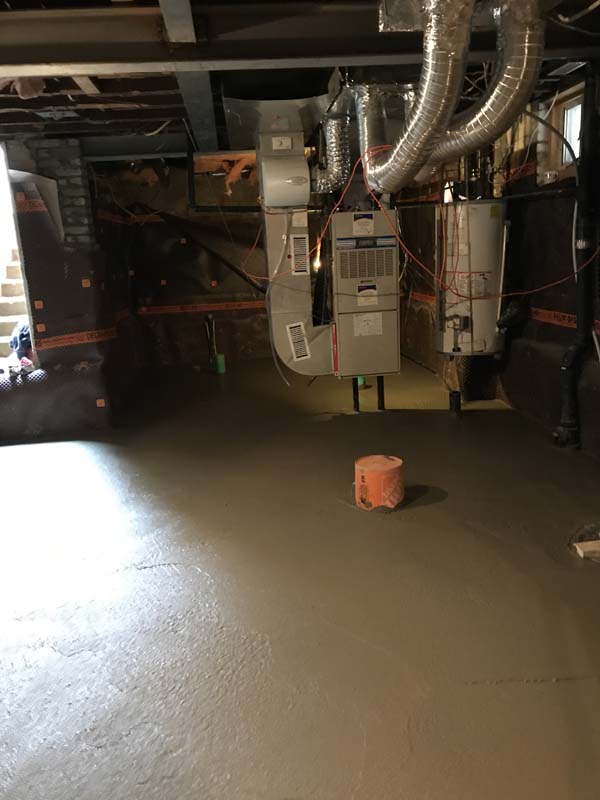
The final step of basement underpinning is the pouring of the concrete slab. all plumbing and electrical utilities must be installed up to this point as they will be hidden in the concrete. The concrete must be laid smoothly. This will create the best conditions for future flooring. This is the last step of basement underpinning. Remains to wait for the concrete to dry and carry out a general cleaning after the construction works.
Monday – Saturday: 9am – 85pm
Sunday: closed